
Now Reading: Elsevier Launches ScienceDirect AI: What Researchers Need to Know
-
01
Elsevier Launches ScienceDirect AI: What Researchers Need to Know
Elsevier Launches ScienceDirect AI: What Researchers Need to Know
What Is ScienceDirect AI and Why Did Elsevier Launch It?
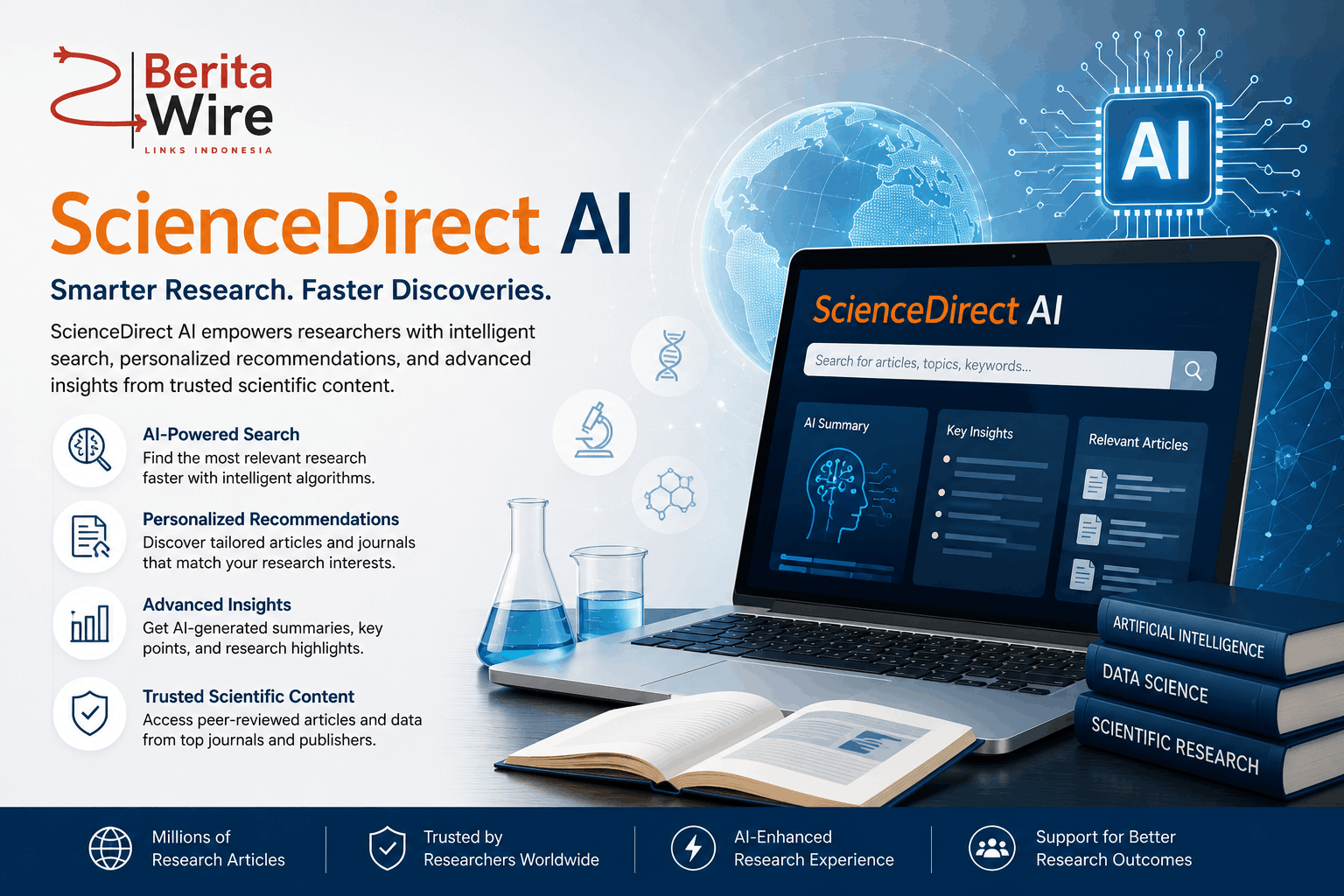
Elsevier launched ScienceDirect AI which is an artificial intelligence software that helps researchers to search for, analyze compare with other papers on a topic they are studying. The tool was officially launched on March 12, 2025, and is integrated with ScienceDirect, Elsevier’s platform for peer-reviewed scientific, technical, health, and technology research.
Please note that ScienceDirect isn’t an old start-up company. For some time, ScienceDirect is one of our well-known research sites. One of these developments has been the introduction and growth of ScienceDirect AI that provides generative AI features for research work.
To researchers who have to deal with thousands and even millions of papers then it’s easy enough for them to go from a question of research to relevant evidence without spending much time looking for it and comparing documents manually.
Key Takeaways
- ScienceDirect AI was launched by Elsevier in March 2025.
- It works with millions of peer-reviewed full-text articles and book chapters.
- Researchers may be able to pose queries through natural language instead of just searching for keywords.
- Request ScienceDirect AI gives you a reference summary and snippet of sources.
- A Reading Assistant lets people query a particular article and book chapter.
- Experiment Comparison allows researchers to compare experiments and their outcomes from a particular paper.
- Elsevier says testing with more than 30,000 researchers and librarians indicated potential savings of around 50% in literature-research time.
- The answers provided by ai need to be verified with respect to their source as it does not substitute for human judgement and peer review.
What Is ScienceDirect?
ScienceDirect is a digital library provided by Elsevier that provides access to scientific, technical, health, and technology literature, including journal articles and book chapters. Its used for researchers, students, academics, healthcare professionals, institutions and corporate R&D teams.
It has powerful search functions; personalized recommendations; reading history; notifications; citation tools; access to academic literature.
ScienceDirect is especially helpful for researchers who want to access authoritative academic literature instead of just general web search results.
What Is ScienceDirect AI?
AI is added as a research layer by ScienceDirect AI. Rather than just searching for keyword phrases to review results from a search engine, people should be able to write about what they want to find out themselves.
According to Elsevier, ScienceDirect AI can search through millions of full-text articles and book chapters and provide answers backed by references and source snippets. People may be able to go through these sources and back to their original studies.
It matters since good-quality AI research should help you find out where your answer came from instead of giving you a random response without any basis for it.
How Does ScienceDirect AI Work?
AI-powered search and analysis is used by ScienceDirect AI for finding relevant data from scientific papers.
A question may be asked by a scientist like this one.
What are some of the major factors affecting battery degradation in electric vehicles.
Rather than manually searching through many articles, this tool will help you find relevant research papers and provide summaries along with references to supporting materials.
Elsevier states that Ask ScienceDirect AI uses natural language queries and hybrid search combining semantic and keyword approaches. The answers may contain snippets from sources that were used for generating this response.
The researchers could also read these originals to judge for themselves.
What Are the Main ScienceDirect AI Features?
1. Ask ScienceDirect AI
This feature allows researchers to ask questions in natural language and receive summaries based on relevant full-text research.
The system can provide references, source snippets, and related insights, helping users move from a broad research question toward relevant academic literature.
2. Reading Assistant
The Reading Assistant tool works on one piece of writing (an article) and a whole book chapter.
The researchers may inquire regarding this paper; ask for a summary; look at a section; and then ask more questions. It may help to guide people to parts of a text that support their answer.
It is especially helpful if you have an extensive research paper and one that is very technical.
3. Compare Experiments
Comparing several scientific studies manually is tedious. The Compare Experiments tool on ScienceDirect ai helps organize experiments from a selected set of research papers.
It is capable of extracting information like objectives of study, methodology used to conduct research and outcomes obtained for comparison purposes.
This type of structured comparison is helpful for researchers doing a review of literature as it helps them find out similarities and differences among research papers.
Why Is ScienceDirect AI Important for Researchers?
The science literature is rapidly developing and making it hard for people to find out what they need. Researchers might have to spend a lot of hours searching for information from databases; reading abstracts; opening papers; comparing methods; identifying relevant results.
AI at ScienceDirect is designed for reducing it through helping researchers find pertinent data more quickly and easily with references back on their sources.
Elsevier said that researchers and librarians from over 70 universities and R&D-intensive organizations, involving more than 30,000 users, participated in testing and development. Elsevier also found out that testing showed ScienceDirect AI could cut literature-research time by about 50%.
This is a result from an Elsevier study and not an assurance that every scientist will save the same amount of time.
Is ScienceDirect AI Reliable?
The ScienceDirect AI is based upon peer-reviewed articles with citation links and excerpts for better traceability. Nevertheless, people must not use ai-generated summaries as an alternative to reading and evaluating the original scientific work.
According to Elsevier’s own support documentation, ai-generated responses are produced on-demand and not reviewed by a human editor. Consistency, conclusion should be verified by a specialist if necessary.
Academic research should be done with AI being an assistant rather than being a final authority.
ScienceDirect AI vs Traditional Search
Academic literature search usually involves entering a keyword, reviewing results; reading an article abstract and full text; comparing results manually.
AI ScienceDirect adds conversational and analytical capabilities to this process.
- Traditional Research Search
- ScienceDirect AI
- Keyword-focused searching
- Natural-language questions
- Manually review results
- AI-assisted summaries
- Read individual documents
- Reading Assistant
- Manually compare studies
- Compare Experiments
- Find evidence manually
- Source snippets and references
- Multiple research steps
- More integrated workflow
It’s not about eliminating books search entirely, but rather improving access to information and literature synthesis.
ScienceDirect AI and the Future of Academic Research
ScienceDirect AI development is an indication that there’s more to how scientists access scientific knowledge nowadays. Rather than searching for individual papers, researchers need tools to find relationships between studies; summarize complex information; compare experiments; and identify evidence.
Continues to expand on AI research ecosystem by Elsevier. ScienceDirect AI was awarded Best Generative AI Solution at the 2025 CODiE Awards, according to Elsevier.
Also, ScienceDirect AI is being placed on LeapSpace (a research-oriented AI workspace) which combines credible scholarly content and AI-assisted research capabilities.
What Should Students and Researchers Keep in Mind?
AI at ScienceDirect will help with ease of doing a study; however, people must practice ethical research methods.
- Check out of key assertions with respect to your source document.
- Read about methodology and limitations prior to making conclusions.
- Cite sources, and reference passages.
- Do not use AI summary as a substitute to peer-reviewed research.
- Adhere to university, journal, and institutional guidelines of AI usage.
- Apply expert opinion for interpreting complicated science results.
Frequently Asked Questions
What did Elsevier launch?
Elsevier launched ScienceDirect AI on March 12, 2025, adding generative AI capabilities to the established ScienceDirect research platform.
Is ScienceDirect a new platform?
No. ScienceDirect is an established Elsevier research platform. The recent major launch is ScienceDirect AI.
What can ScienceDirect AI do?
It can help researchers search scientific literature, generate referenced summaries, interact with individual documents, and compare experiments across selected research papers.
Is ScienceDirect AI free?
Access depends on the specific feature and subscription arrangement. Elsevier currently offers a free trial for some individual academic and student access, while broader or unlimited access may require a subscription.
Can ScienceDirect AI replace researchers?
No. It is designed to assist research workflows. Researchers still need to evaluate the original evidence, methodology, limitations, and scientific context.
Why is ScienceDirect AI important?
It addresses a major challenge in modern research: finding and synthesizing relevant information efficiently while maintaining connections to trusted scholarly sources.
Conclusion
Elsevier ScienceDirect AI is a significant milestone for ai-assisted research and development. Not only does it generate answers based on general web data but it also helps researchers access academic papers and trace ai-generated information back to its source.
Features like Ask ScienceDirect AI, Reading Assistant, and Compare Experiments are designed to save time spent searching for literature and analyzing it while still being connected with its scientific history.
With AI being integrated further within education processes then its speed, organization skills would need to be combined by humans for critical thinking, fact-checking and ethical research practices. Contact us For Press Release

Related Posts



Previous Post
Next Post










Post on Google News